FEBRUARY 1998 - FEBRUARY 1999
SUBSIDIARIES:
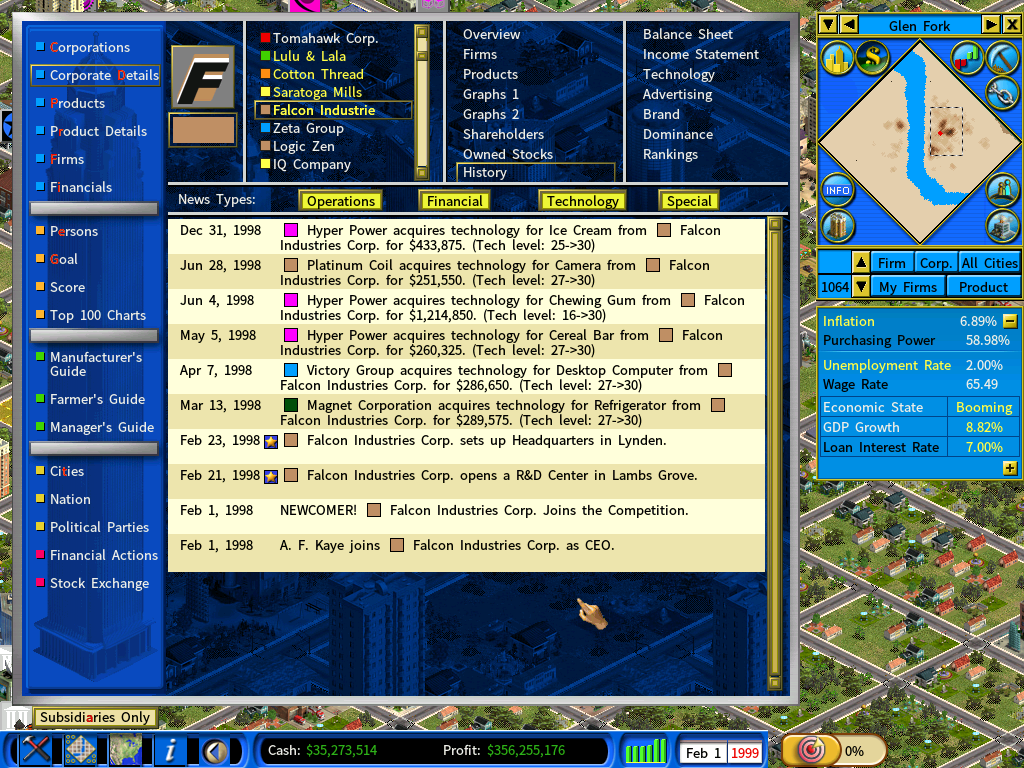
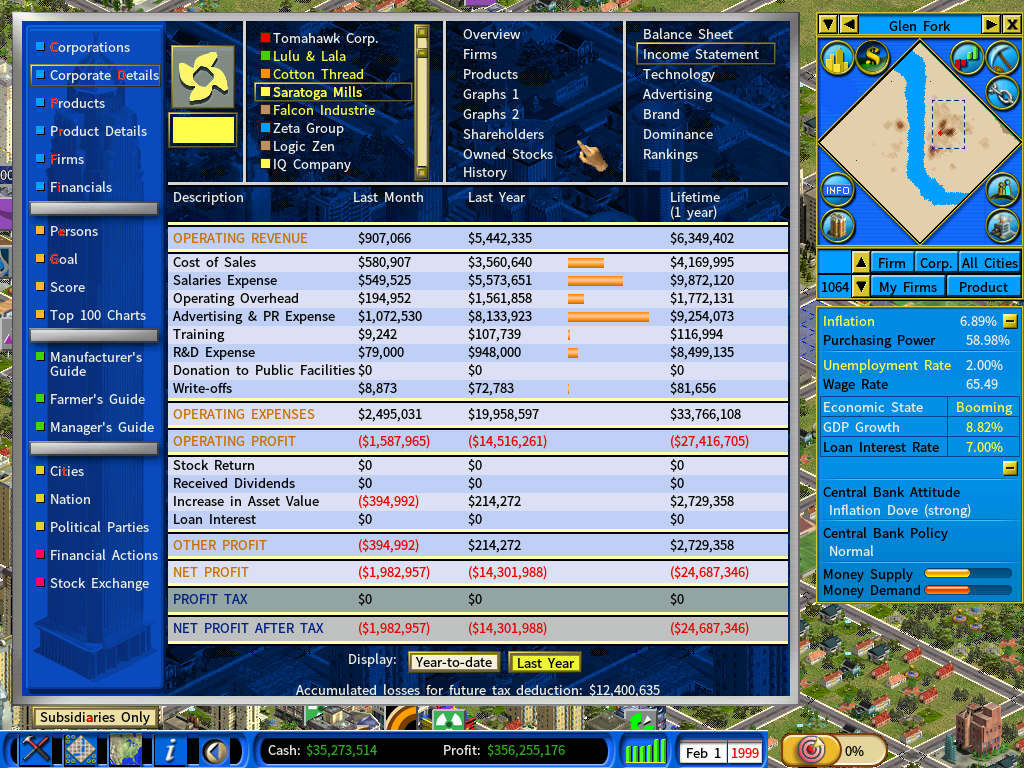
First of all, we have a new subsidiary, so welcome Falcon Industries, focused on the electronic product mega-class. We capitalized it with 350 million of new money (we monetized our assets, once more) starting 1998, so at this moment the corporation is one year old. We used 50 million of that money to fund a new political party. So from now on Falcon Industries will be the political sponsor.
- Falcon Industries Corp-History-1999.png (576.86 KiB) Viewed 14855 times
With this we have almost finished the first part of our subsidiaries program: creating a new venture to develop each one of the product mega-classes (food, fashion, electronics and health care). We might enter the jewelry area in time.
If future conditions allow, we´ll continue setting up new corporations, but this time aimed at each one of the "mini-classes" and also at each class inside the mega-class. The proper way would be once we make the big four (five) public through an IPO, and after offloading part of our ownership for cash. Otherwise getting a high price for them would be rather difficult as the new set-ups will naturally increase the competition, eating up part of their market share, and profits.
We´ll have to strike a balance between our need to cash in the subsidiaries and our need to build up the nation through increased competition. The same way we refrain from issuing new Tomahawk Corp. shares to pay down debt, because we believe we can get a higher price, so we´ll have to consider timing the IPOs and the new "mini-ventures" as best we can.
Of course, our new ventures could prove to be a disaster and we might lose quite some money, but that´s the way it is.
- Saratoga Mills-Income Statement-1999.png (510.05 KiB) Viewed 14855 times
FINANCES:
Inflation has gone from 6,7% to 7,2% and back below 7% again.
The banking cartel has increased the interest rates to 7%, so real rates are about 0%.
In case some people wonder why we talk about monetizing our assets, that in our opinion is the proper way to look at debt. We just use the expresion "take a loan" and so on as it´s the common parlance. But we prefer to be more precise, as to monetize our assets first the bank values our property, and then puts new money, according to the valuation, on our hands for a temporary change in the ownership, plus interests.
At this time these interests are in fact 0%, so the cartel, the only people with the keys to new money, is helping private hands develop the country through asset monetization.
As long as we have a big asset to sell (temporarily) to the banks any venture of any size that makes the slightest profit (above real rates) can be funded through debt and held with ease.
We hope the current situation will last a while longer.
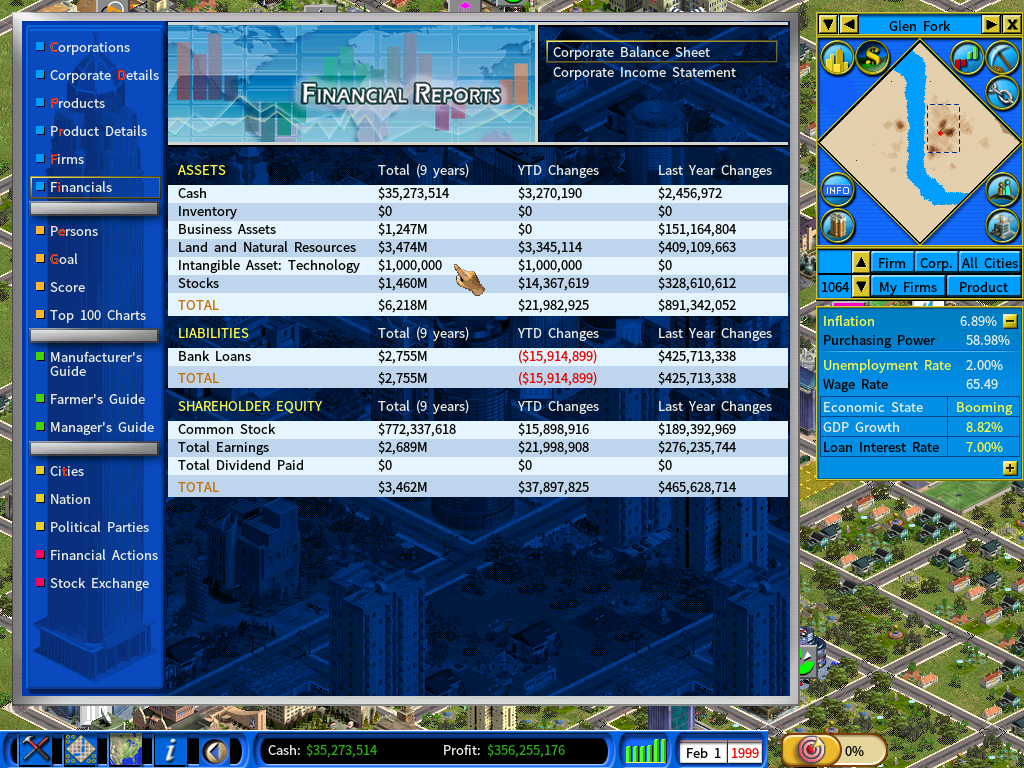
We increased our debt by 423 million and our assets by 476 million. We used our debt to capitalize the new subsidiary, buy land, stocks and to build new offices and apartments in all cities.
The "liquid" land available on our books, as well as the number, location, value etc. of the old and new RE firms, will be reported as soon as we create the Improved IS&BS for RE firms for 1999.
Notice for the first time a technology asset in the balance sheet, albeit small-ish.
- Balance Sheet-feb1999.png (624.92 KiB) Viewed 14855 times
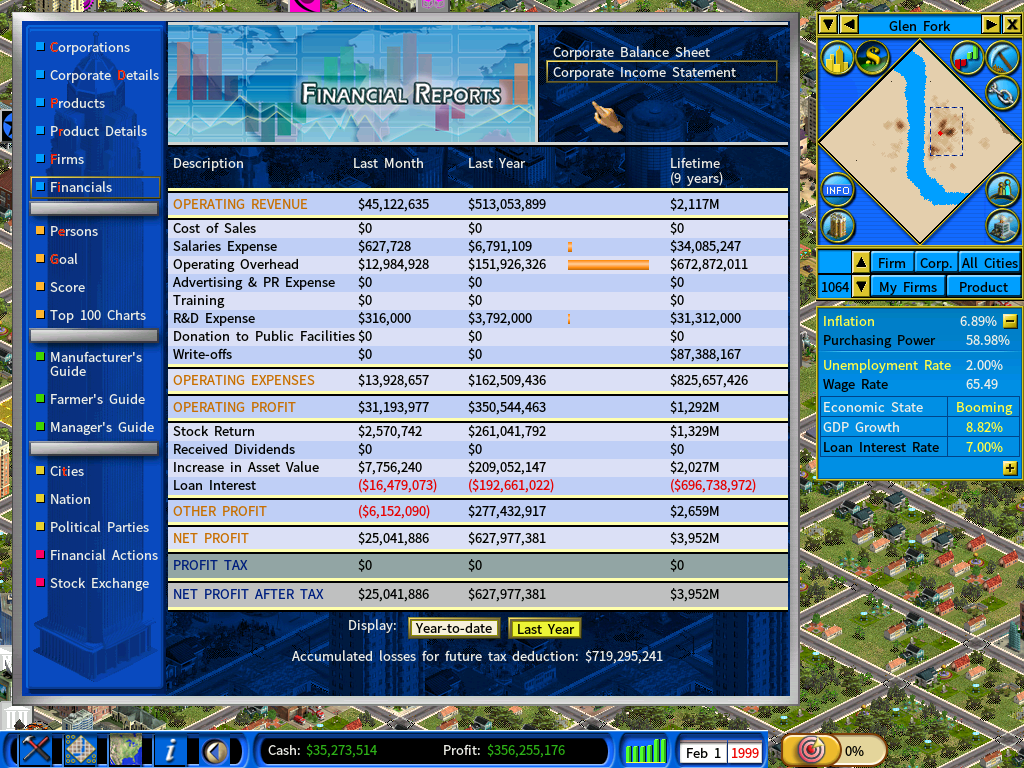
Our profits from running the RE firms increased by 4 million a month to 31 million a month. Increasing quite steadily.
More than 50% of it goes to pay down our debt.
- Income Statement-feb1999.png (527.72 KiB) Viewed 14855 times
The stock price has decreased YoY for the first time. As we have increased both our net assets and profits we believe it will be a small bump on the road and that it will re-enter its natural path, upwards. We still don´t consider issuing any new shares yet.
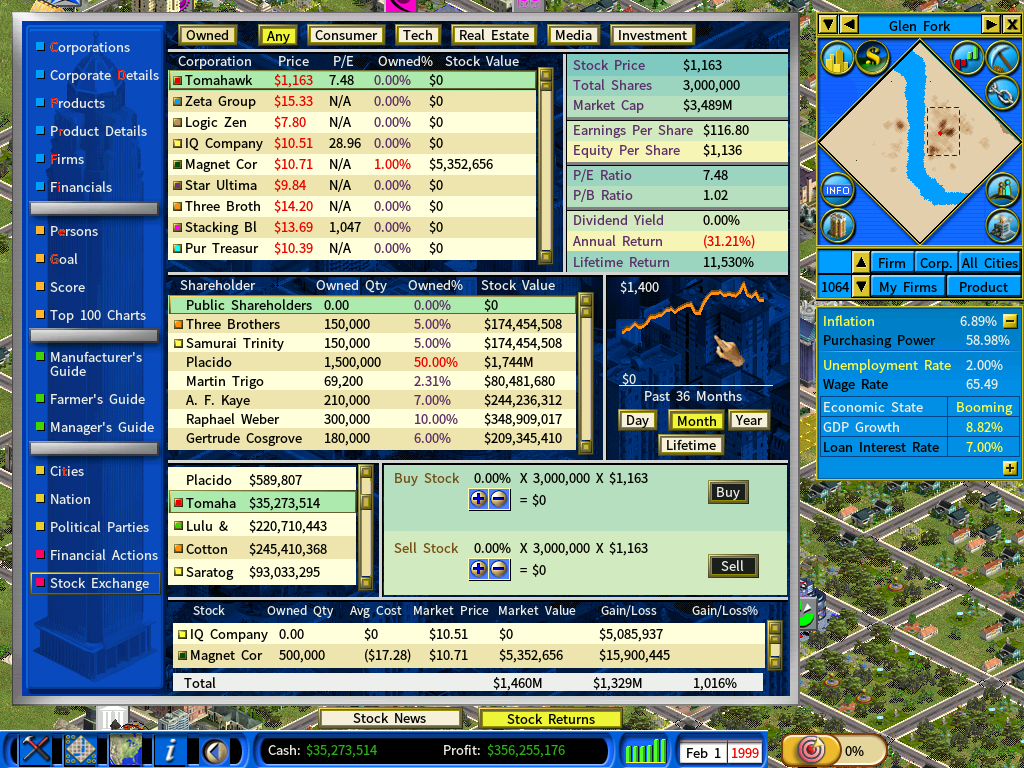
- Stock Market-feb1999.png (540.23 KiB) Viewed 14855 times
You can take a peek at our current holdings below. Still quite modest. We like to see sales in their reports and the ones held show just that. The exception are Samurai Trinity and Ideas Hotbed which are centered on stock investments and are held as cash equivalents.
Overall, all public companies are still overvalued and we don´t want to stack too many shares on our books.
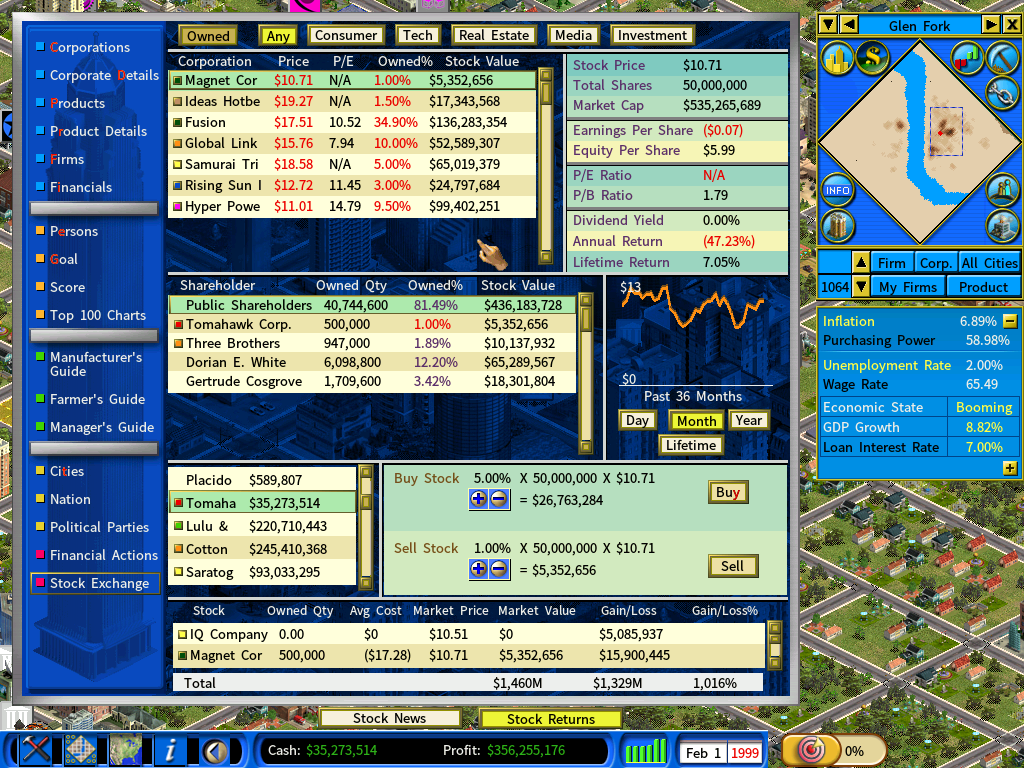
- Stock Market2-feb1999.png (567.4 KiB) Viewed 14855 times